
The Gap Between AI Adoption and AI Impact in Modern Systems
The Gap Between AI Adoption and AI Impact in Modern Systems
Artificial intelligence has become one of the biggest priorities for modern businesses. Organizations across industries are investing heavily in AI tools, machine learning platforms, automation systems, and intelligent workflows to improve productivity and gain a competitive advantage. Companies are launching pilot projects, hiring AI specialists, and experimenting with advanced technologies at an unprecedented pace.
Yet despite this massive investment, many organizations still struggle to achieve meaningful results.
Businesses may successfully adopt AI technologies, but actual operational impact often remains surprisingly limited. AI systems are deployed but rarely integrated deeply into workflows. Pilot projects generate excitement but fail to scale. Teams experiment with advanced models, yet measurable ROI remains unclear.
This growing disconnect between AI adoption and business impact has become one of the biggest challenges facing enterprises today.
The problem is not necessarily the technology itself. In most cases, organizations fail because they lack scalable architecture, proper integration, strong data foundations, and clear operational alignment.
This is where professional Scalable AI development services play a critical role. Businesses that approach AI strategically — with scalability, integration, governance, and long-term operational value in mind — are far more likely to transform AI investments into measurable business outcomes.
In this blog, we’ll explore why the AI adoption-impact gap exists, the most common reasons AI initiatives fail, and how organizations can close this gap using scalable AI implementation strategies.
What Is the AI Adoption-Impact Gap?
The AI adoption-impact gap refers to the difference between implementing artificial intelligence technologies and achieving measurable business outcomes. Many organizations deploy AI tools successfully but struggle to generate operational improvements due to poor integration, weak data foundations, limited scalability, and unclear business objectives.
Understanding the AI Adoption vs Impact Gap
AI adoption is growing rapidly across industries. Businesses are integrating machine learning models, automation tools, predictive analytics systems, conversational AI, and intelligent assistants into their operations.
However, adoption alone does not guarantee business transformation.
Many organizations successfully launch AI initiatives but fail to generate measurable improvements in:
- Revenue growth
- Operational efficiency
- Customer experience
- Decision-making
- Productivity
- Cost reduction
This creates the “AI adoption vs impact gap.”
Why the Gap Exists
Most organizations focus heavily on acquiring AI technology but underestimate the complexity of operationalizing it.
Successful AI implementation requires:
- Scalable infrastructure
- Integration with existing systems
- Reliable data pipelines
- Governance frameworks
- Change management
- Long-term operational planning
Without these foundations, AI remains isolated from real business processes.
Professional Scalable AI development services help organizations close this gap by building AI systems designed for enterprise-scale deployment rather than isolated experimentation.
Why Most AI Initiatives Fail to Deliver Results
Isolated AI Experiments
Many businesses build standalone AI prototypes that never connect with operational workflows.
For example, an AI chatbot may function independently but fail to integrate with:
- CRM systems
- Customer support platforms
- Knowledge bases
- Operational analytics
As a result, the AI tool creates limited business value.
This is one reason why AI Integration Services are increasingly important for successful enterprise AI adoption.
Lack of Scalability
Many AI pilots work well in controlled environments but fail when exposed to real-world operational demands.
Common scalability issues include:
- Infrastructure bottlenecks
- Slow processing times
- Rising cloud costs
- Data synchronization failures
- Limited concurrent usage support
Scalable systems require architecture specifically designed for growth.
Professional Scalable AI development services focus on building production-ready AI ecosystems capable of supporting enterprise workloads efficiently.
Weak Data Foundations
AI systems depend heavily on high-quality data.
Unfortunately, many organizations operate with:
- Fragmented databases
- Inconsistent records
- Incomplete datasets
- Poor governance standards
- Outdated infrastructure
Even advanced AI models produce weak results when trained or deployed using poor-quality data.
Strong data architecture is essential for long-term AI success.
Poor Integration with Existing Systems
Many organizations underestimate how difficult it is to integrate AI into existing business environments.
Modern enterprises often rely on dozens of systems, including:
- ERP platforms
- CRM tools
- HR systems
- Analytics software
- Legacy infrastructure
- Internal applications
Without effective AI Integration Services, AI capabilities remain disconnected from operational workflows.
This severely limits business impact.
Focusing on Technology Instead of Business Outcomes
Some organizations prioritize advanced models and technical innovation without clearly defining business objectives.
AI should solve real operational problems, such as:
- Reducing support costs
- Improving forecasting
- Automating repetitive tasks
- Enhancing personalization
- Accelerating workflows
Businesses that align AI investments with measurable operational goals are more likely to achieve meaningful ROI.
The Role of Scalable AI Development Services
Professional Scalable AI development services focus on building enterprise-grade AI systems capable of delivering long-term operational value.
Rather than simply deploying models, these services address the full AI lifecycle, including:
- Infrastructure planning
- System integration
- Scalability optimization
- Security and governance
- Workflow automation
- Monitoring and maintenance
This comprehensive approach significantly improves implementation success rates.
Building Production-Ready Architecture
Enterprise AI systems require a robust architecture capable of handling:
- Large-scale data processing
- High user volumes
- Real-time inference
- Workflow automation
- Cross-platform integrations
Modern scalable AI architecture often includes:
- Microservices
- Cloud-native infrastructure
- Event-driven systems
- Distributed computing
- API-first design
These technologies improve both flexibility and long-term scalability.
Ensuring Operational Scalability
AI systems must continue performing efficiently as operational complexity grows.
Professional Scalable AI development services help businesses optimize:
- Infrastructure costs
- Resource allocation
- Workflow efficiency
- Model deployment pipelines
- System reliability
Scalability planning prevents organizations from rebuilding systems later as demand increases.
Supporting Long-Term Governance
Governance becomes increasingly important as AI systems gain operational influence.
Businesses need visibility into:
- AI decisions
- Data usage
- Security risks
- Compliance requirements
- Workflow performance
Governance frameworks improve transparency, accountability, and operational trust.
Organizations partnering with an experienced AI development company in the USA often implement governance systems much earlier and more effectively.
Key Strategies to Bridge the Gap
Start with Business Problems, Not Technology
Businesses should identify operational pain points before selecting AI technologies.
Strong AI use cases often focus on:
- Customer support automation
- Workflow optimization
- Predictive analytics
- Operational forecasting
- Employee productivity
Starting with measurable business problems improves implementation success.
Build Modular and Scalable Systems
Scalable architecture allows organizations to expand AI capabilities gradually without rebuilding infrastructure.
Modern AI systems should support:
- Modular deployment
- Flexible integrations
- Independent scaling
- Workflow orchestration
This improves adaptability as business needs evolve.
Prioritize Strong Integration
AI systems generate value only when connected deeply to operational workflows.
Professional AI Integration Services help organizations integrate AI capabilities across:
- CRM systems
- ERP platforms
- Customer support tools
- Analytics systems
- Operational databases
Integration transforms isolated AI tools into scalable business capabilities.
Implement MLOps and Governance Early
MLOps helps businesses manage the AI lifecycle effectively.
This includes:
- Model versioning
- Deployment automation
- Monitoring systems
- Performance tracking
- Continuous optimization
Governance frameworks ensure operational reliability and compliance.
Focus on Organizational Change Management
AI adoption requires more than technology implementation.
Employees need:
- Training
- Process clarity
- Operational support
- Transparency
- Leadership alignment
Successful AI transformation depends heavily on organizational readiness.
How AI Integration Services Make the Difference
One of the biggest reasons organizations fail to achieve AI impact is disconnected systems.
AI models may generate valuable insights, but if they cannot interact with operational workflows, their business value remains limited.
This is why AI Integration Services are often the missing link between AI experimentation and operational transformation.
Connecting AI to Real Workflows
Integration services allow AI systems to:
- Access real-time data
- Trigger workflows
- Update business systems
- Coordinate across departments
- Automate decision-making
Many organizations also deploy these capabilities through cross-platform applications to improve accessibility and user adoption. This creates measurable operational improvements.
Supporting Legacy Infrastructure
Many enterprises still rely on older systems that were never designed for AI integration.
Modern integration strategies use:
- Middleware platforms
- APIs
- Event-driven systems
- Hybrid architecture
This allows organizations to modernize gradually without replacing critical infrastructure immediately.
Improving Data Accessibility
Integrated AI systems gain access to centralized operational data, improving:
- Accuracy
- Personalization
- Forecasting
- Decision-making
Strong integration significantly improves AI effectiveness.
Organizations using advanced artificial intelligence development services increasingly prioritize integration architecture during the earliest implementation stages.
Common Signs Your AI Strategy Is Not Delivering Impact
Businesses should evaluate whether their AI investments are producing measurable outcomes.
Warning signs include:
- AI projects stuck in pilot stages
- Limited operational adoption
- Weak ROI visibility
- Poor workflow integration
- Low employee engagement
- High maintenance complexity
- Scalability limitations
Recognizing these issues early allows businesses to adjust strategy before investments become inefficient.
Frequently Asked Questions
Q1. Why do many companies struggle to achieve real business impact from AI?
Many organizations focus heavily on adopting AI technologies but underestimate the importance of integration, scalability, governance, operational alignment, and change management.
Q2. What are Scalable AI development services?
Scalable AI development services help businesses design, deploy, and manage AI systems capable of handling enterprise workloads, growing operational demands, and long-term scalability requirements.
Q3. Why are AI Integration Services important for AI success?
AI Integration Services connect AI systems with existing business applications, workflows, databases, and operational tools, enabling AI to generate meaningful real-world business value.
Q4. Can mid-sized businesses benefit from artificial intelligence development services?
Yes. Many providers of artificial intelligence development services offer phased implementation strategies that allow mid-sized businesses to adopt AI gradually while managing costs effectively.
Q5. How long does it take to close the AI adoption-impact gap?
Organizations following structured implementation strategies often begin seeing measurable operational improvements within several months, depending on infrastructure readiness and integration complexity.
Conclusion
The gap between AI adoption and real business impact remains one of the biggest challenges facing modern enterprises. While many organizations successfully launch AI initiatives, only a small percentage achieve meaningful operational transformation.
Businesses that close this gap focus not only on technology adoption but also on scalability, integration, governance, and long-term operational alignment. Professional Scalable AI development services help organizations move beyond isolated AI experiments and build intelligent systems that deliver measurable business value at scale.
As AI continues reshaping industries, the companies that treat artificial intelligence as a strategic operational capability — rather than a standalone technology initiative — will be best positioned for long-term success.
Looking to build scalable AI solutions or custom AI agents? Contact us today.
Turn AI Adoption into Real Business Impact
Deploying AI is only the first step. Long-term success depends on scalable architecture, seamless integration, strong governance, and measurable business outcomes.
Techvaders helps organizations implement enterprise-grade AI solutions that move beyond experimentation and deliver operational value at scale.
Uncategorized
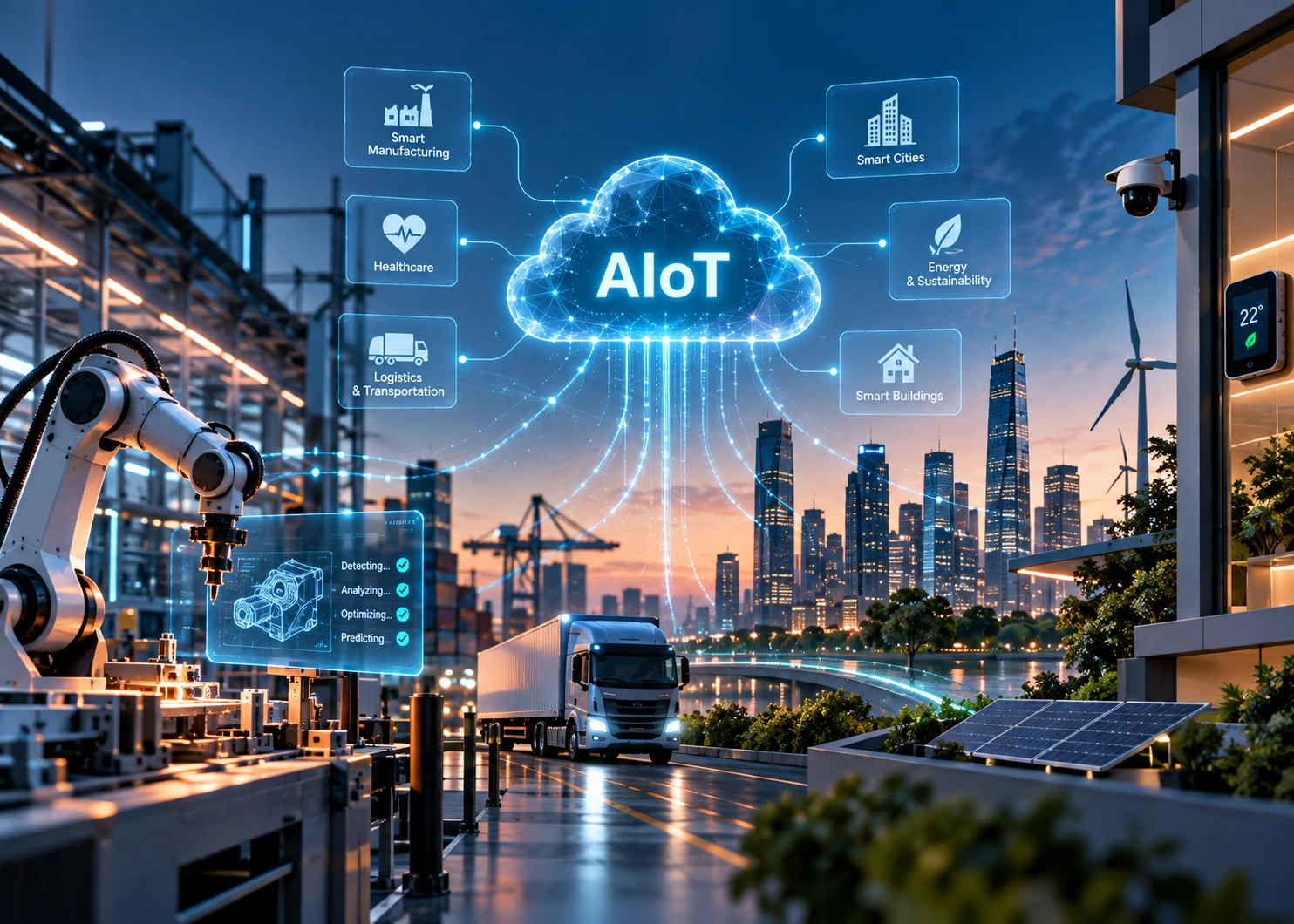
AIoT: How AI and IoT Are Creating Smarter Connected Systems
The Internet of Things (IoT) has transformed the way businesses connect devices, collect data, and monitor physical environments. But collecting data is only the beginning. The next step is making that data intelligent. AIoT, or Artificial Intelligence of Things, combines artificial intelligence with IoT to create connected systems that can analyze information, identify patterns, make…

Uncategorized
AI-Native Software Development: How AI Is Changing the Way Software Is Built
Software development is entering a new phase. Artificial intelligence is no longer being used only as a coding assistant that suggests a few lines of code. AI is increasingly becoming part of the entire software development lifecycle—from planning and architecture to coding, testing, deployment, monitoring, and maintenance. This shift is known as AI-native software development.…
Uncategorized
How to Migrate a Domain Safely Without Downtime
Your domain is more than a web address. It connects customers to your website, email, applications, landing pages, and other digital services. When you need to move your domain to a new registrar, poor planning can lead to unnecessary downtime, broken email, DNS problems, or delays. The good news is that domain migration does not…